
 Image 1 of 1
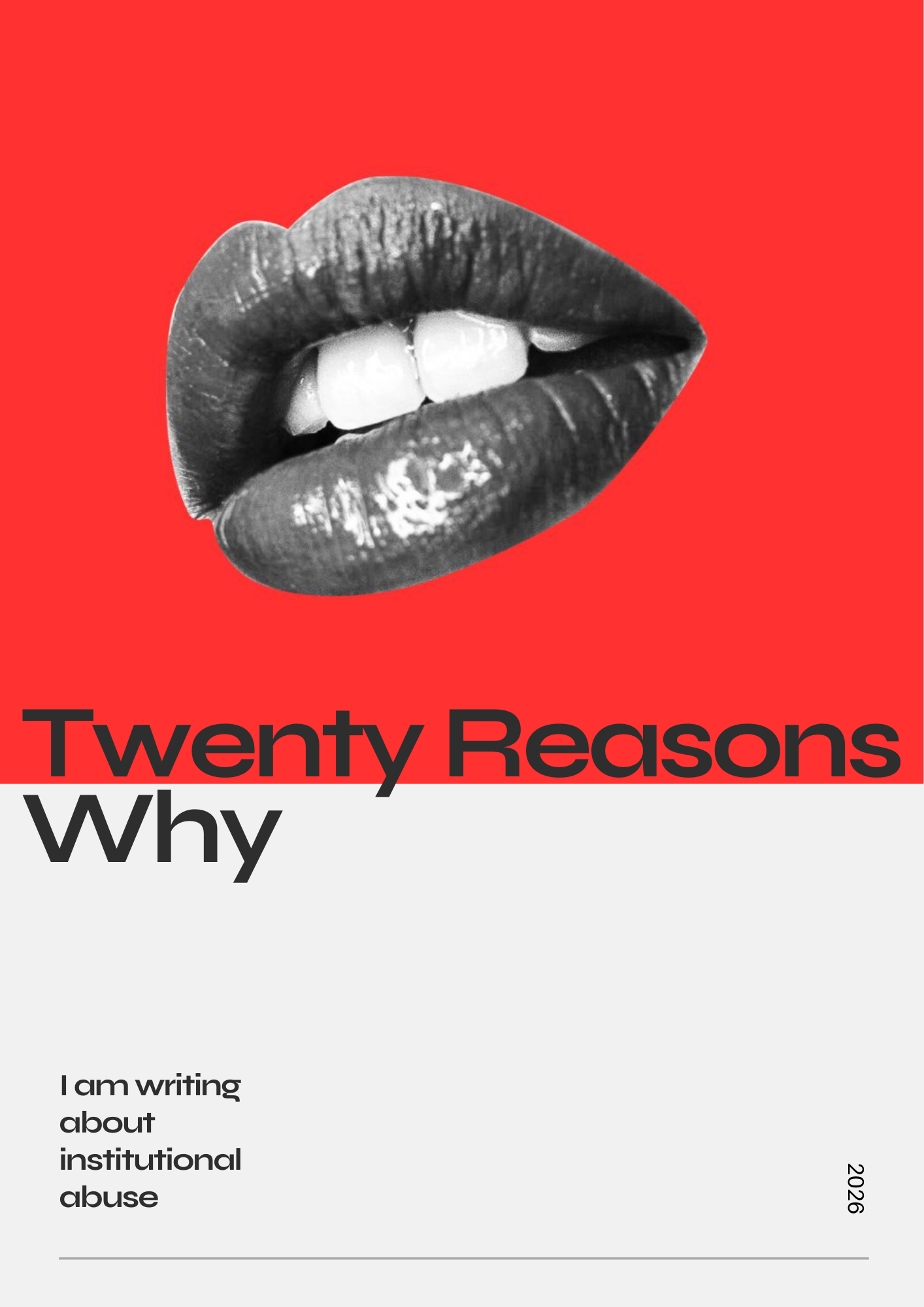
Twenty Reasons Why is a feminist manifesto written in the aftermath of a not guilty verdict, where law exhausted its language long before lived experience did.
Bridging critical theory and intimate reflection, this PDF offers twenty carefully argued reasons for writing against the simplifications of consent, the authority of institutions, and the expectation that survivors translate their lives into legally acceptable terms. It situates personal experience within systems of power, while refusing the false comfort of tidy conclusions.
What emerges is not a demand for belief, but an invitation to think differently—to linger with complexity, to take desire seriously without losing sight of harm, and to recognise adolescence, memory, and attachment as politically charged sites. The text is rigorous yet tender, analytical yet emotionally precise.
This is a document about language: how it fails, how it wounds, and how it can be remade. It is also, quietly, about hope—the hope that careful thinking can coexist with feeling, that naming a relationship does not negate harm, and that speaking in one’s own voice is itself a form of repair.
Twenty Reasons Why will resonate with readers in feminist theory, cultural studies, law, education, and trauma-informed practice, as well as anyone drawn to writing that believes analysis and intimacy belong together.
© Camille Waring 2026
All rights reserved. This work is protected by copyright. It contains personal and sensitive material. No part of this publication may be reproduced, stored in a retrieval system, or transmitted in any form or by any means—electronic, mechanical, photocopying, recording, or otherwise—without the prior written permission of the author, except as permitted under applicable copyright law for the purposes of review, criticism, or scholarly citation.
Twenty Reasons Why is a feminist manifesto written in the aftermath of a not guilty verdict, where law exhausted its language long before lived experience did.
Bridging critical theory and intimate reflection, this PDF offers twenty carefully argued reasons for writing against the simplifications of consent, the authority of institutions, and the expectation that survivors translate their lives into legally acceptable terms. It situates personal experience within systems of power, while refusing the false comfort of tidy conclusions.
What emerges is not a demand for belief, but an invitation to think differently—to linger with complexity, to take desire seriously without losing sight of harm, and to recognise adolescence, memory, and attachment as politically charged sites. The text is rigorous yet tender, analytical yet emotionally precise.
This is a document about language: how it fails, how it wounds, and how it can be remade. It is also, quietly, about hope—the hope that careful thinking can coexist with feeling, that naming a relationship does not negate harm, and that speaking in one’s own voice is itself a form of repair.
Twenty Reasons Why will resonate with readers in feminist theory, cultural studies, law, education, and trauma-informed practice, as well as anyone drawn to writing that believes analysis and intimacy belong together.
© Camille Waring 2026
All rights reserved. This work is protected by copyright. It contains personal and sensitive material. No part of this publication may be reproduced, stored in a retrieval system, or transmitted in any form or by any means—electronic, mechanical, photocopying, recording, or otherwise—without the prior written permission of the author, except as permitted under applicable copyright law for the purposes of review, criticism, or scholarly citation.